Who are you when you write? Where does the line blur between the identity of an author conjuring wordworlds, and the persona of their voice as written? How does the reader perceive the two (or more?) voices, and how do they relate to them?
In the spirit of identity crisis, let's celebrate the late Eleanor Hibbert’s birthday. Primarily a novelist, Hibbert’s 1993 obit in the New York Times provides a long list of pseudonyms: Eleanor Burford, Elbur Ford, Ellalice Tate, Victoria Holt, and Jean Plaidy. “She never revealed her maiden name or age,” the piece reads. “Two of her publishers listed conflicting birth years, 1906 and 1910. For years the true identity of the writer behind the three [most successful] pseudonyms was a tightly guarded secret in the publishing world.”
More recently, we have “Dear Sugar,” the eclectic advice column at The Rumpus — the columnist’s identity revealed as Cheryl Strayed only after Wild took off. (You can find Sugar/Strayed's fabulous and famous WLaMF column here. Mind you, it’s NSFW, but all the more powerful for it.)
JT LeRoy and the enigma of hoax versus pseudonym has pestered truth seekers since the ‘90s. Read backstory on the nonexistent JT at The Guardian, then meet the author behind the mystery in the documentary Author: The JT LeRoy Story. While you’re bingeing instead of writing, indulge in the moral horror of The Heart is Deceitful Above All Things, the film made while the world believed JT was real. (Both are streaming on a device near you.)
Meanwhile, the saga continues: Kristen Stewart and Laura Dern are at work on a film about Savanna Knoop, the woman who played (in real life) the writer who didn’t exist: “A Behind-the-Scenes First Look at Kristen Stewart and Laura Dern in JT Leroy.”
Truth, Love, and Answers may seem in short supply these days, but art — no: ART — can lead us to Heart in an unjust world. Maria Popova’s Brain Pickings gives us a look at the words of LeRoi Jones, writing as Amiri Baraka, in a “lyrical manifesto for largehearted living.” Jones reminds us “We have / each other, and the / World…” Art speaking truth to power, right? (Yes, please and thank you.) Read the articles linked within, and at the end of the page, too.
Last note for the day: A Burn Pile thumb goes up for Lit Hub’s feature piece, “Where Are the Likes? Coming to Terms with Being a Writer on Social Media,” in which Nick Ripatrazone wonders whether our friends clicking love buttons for our successes means anything when it comes to connecting to our work… “Congratulations on publishing a poem is a second’s worth of action; reading and understanding that poem is a real commitment.”
A big CutBank thanks to all of you. Don’t forget to be kind. Don’t forget how much the world needs you. Be generous with your art, your heart, and your energy!
PS: Coming soon: Our regular feature, All Accounts and Mixture, will be presenting new works for you in the next weeks. Keep an eye out for it!

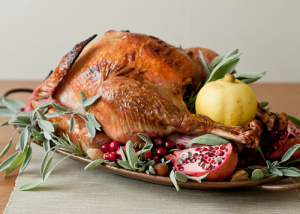 In honor of Thanksgiving, a forkful of literary food links.
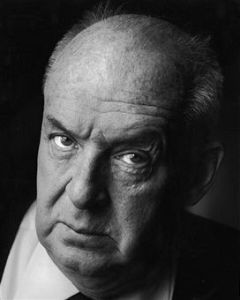 Fiction from fact and the birth of Lolita: Sally Horner of Camden, New Jersey was abducted in 1948 when she was 11 years old. For almost two years, she was shuttled around the country by her abductor, Frank La Salle, whose convoluted criminal past went unnoticed by friends and neighbors who believed his story - that he was her loving, albeit controlling, father. Although her story didn't leave the local media, it caught the attention of one man who would use the news accounts as a springboard for one of his most important works - Vladimir Nabokov, and his Lolita.
 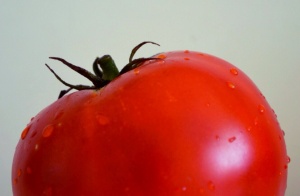 Want more time to write? Engineer/entrepreneur Rob Rhinehart suggests that we can add 90 minutes to our day by spending less time on food preparation, consumption and cleanup.
  On new beginnings: The Toast